

CASE STUDY:
Global Penguin Society
Meet the Magellanic Penguin.
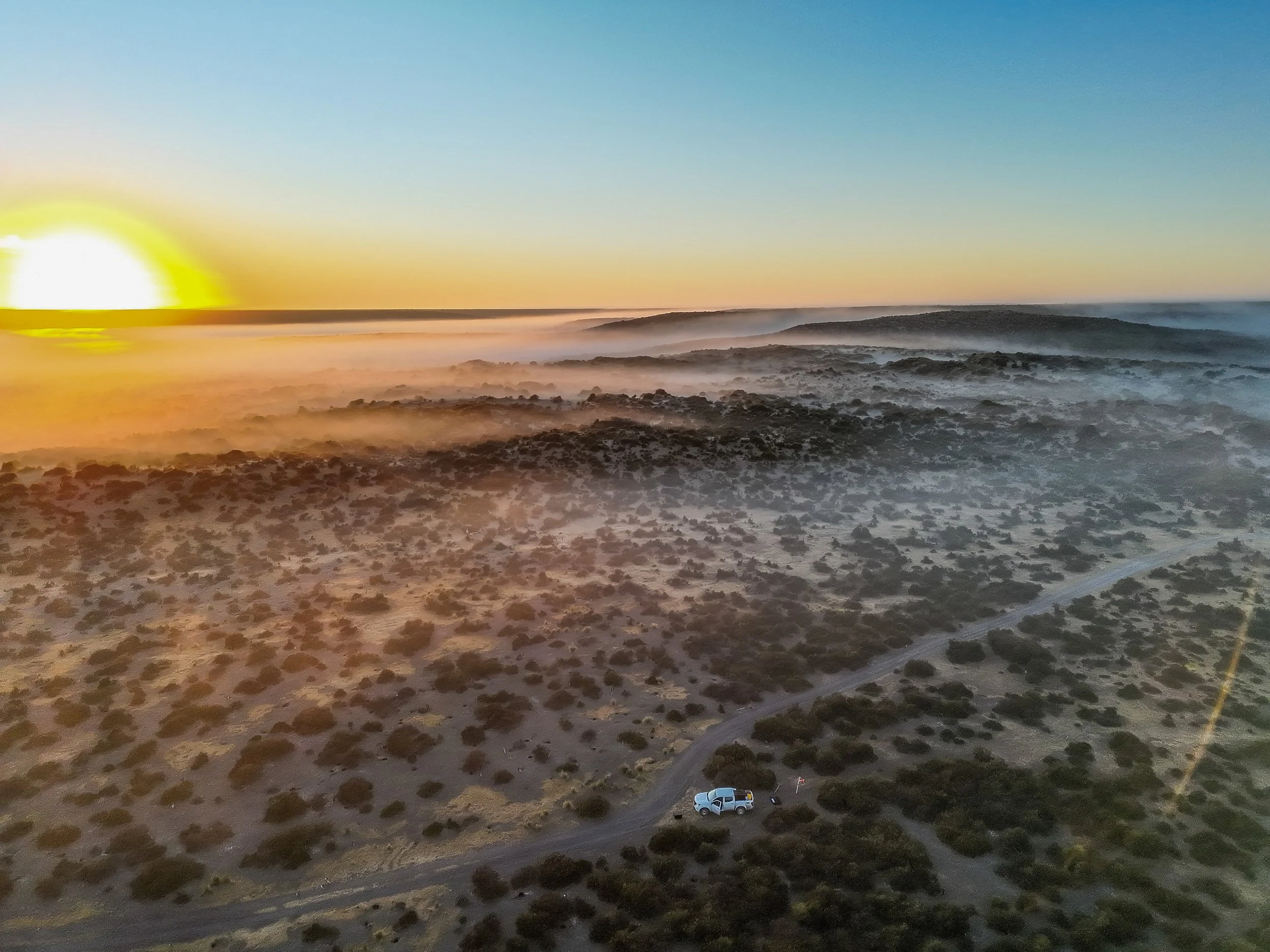
Live in colonies of up to 200,000 breeding pairs in South America.
Estimated total population 1.3 million breeding pairs.
Some colonies in marked decline, others increasing. Distribution shifting northward.
Main threats: oil pollution, fishery mismanagement, human disturbance, habitat degradation, and food availability potentially linked to climate.




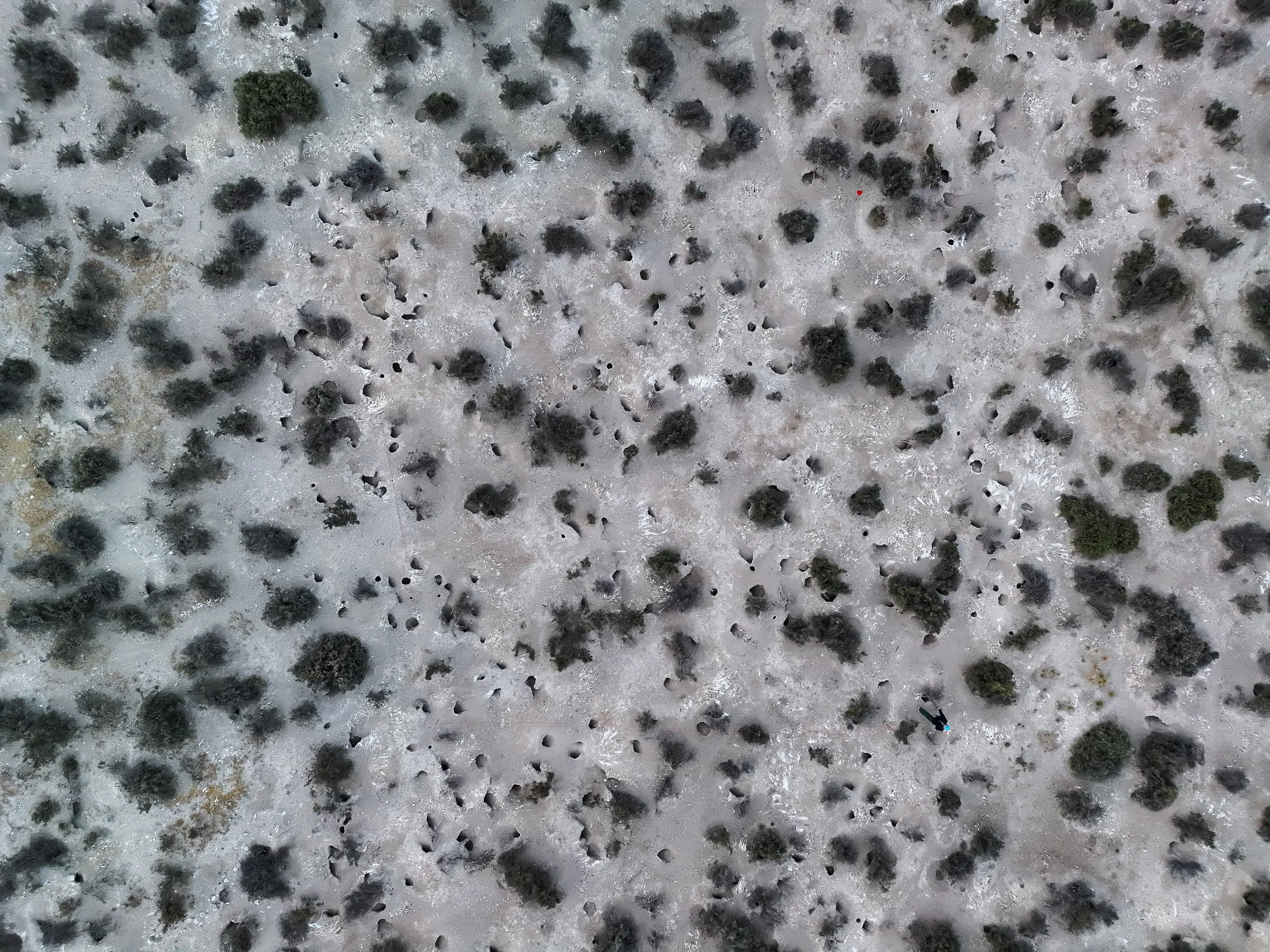
Magellanic penguins nest underground in burrows and under bushes.
Burrows →
The problem:
How do you count 1,000,000 underground penguins
How we did it.
Enterprise tech.
Powerful hardware means we fly longer and higher to cover the whole colony.
Codeveloped method.
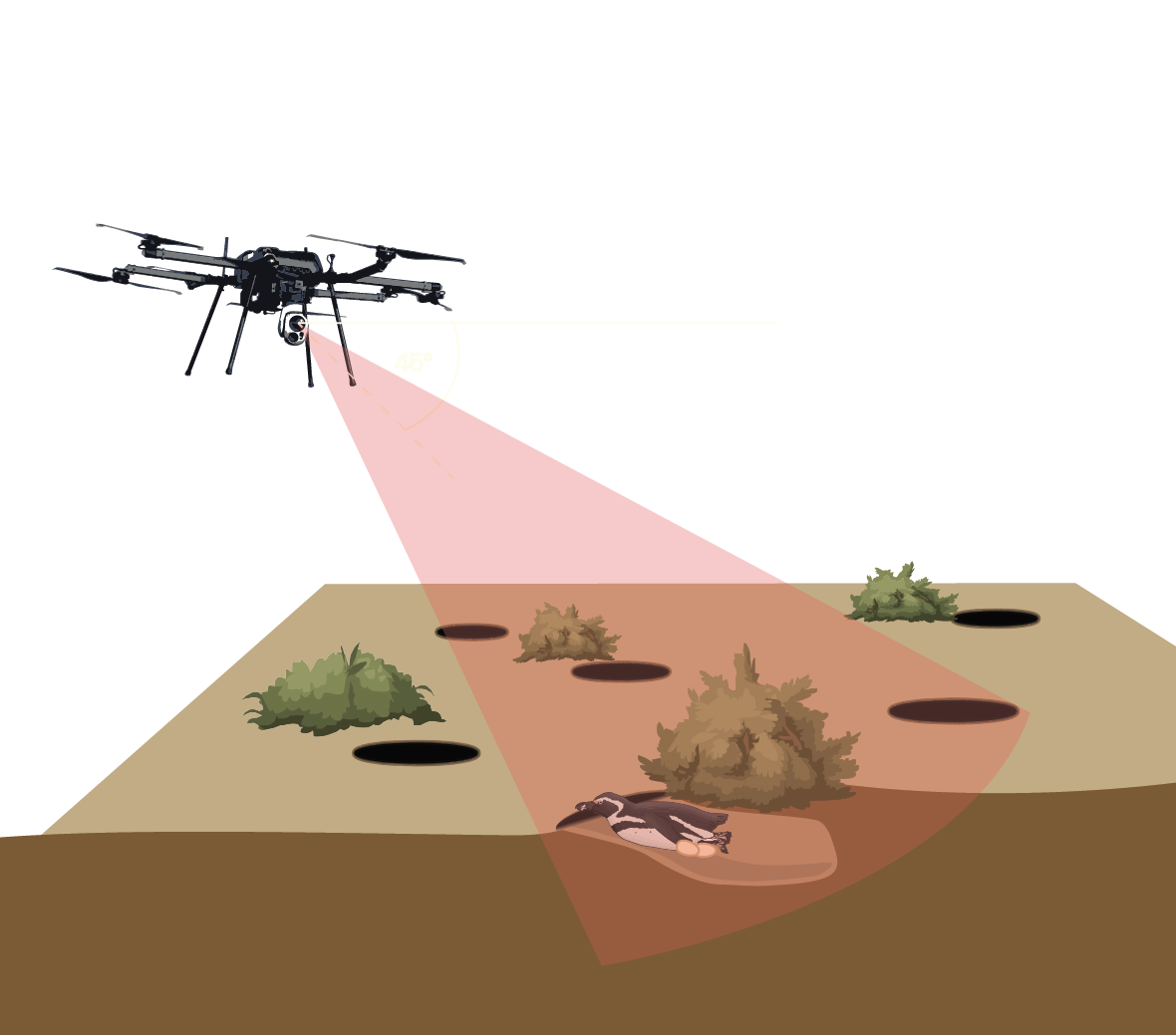
Imaging at 45° enabled view inside burrows. Flying at night increased thermal contrast.
Testing for the right solution.
Experimentation with LIDAR and Thermal imagery to find ideal balance of precision and efficiency.
What We Accomplished.
AI-Powered
Burrow ID.
AI model accurately identifies occupied burrows, allowing for rapid estimations of population with large-scale datasets.
500x improvement in efficiency.
Our team can survey at 500-600 hectares per hour vs 0.7 hectares per hour manually.
Workflow for ongoing surveys.
Efficient, accurate surveys enable GPS to monitor populations continuously for changes and support policy action.
See the data.
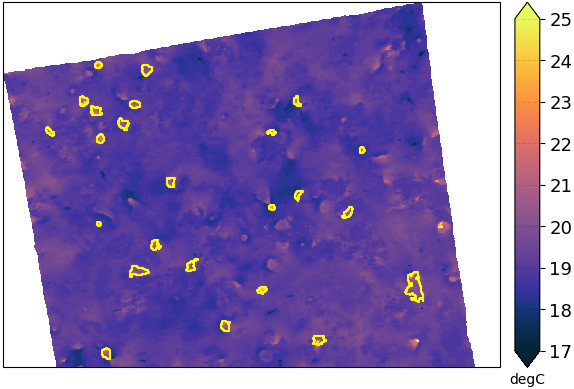
Scalable solution.
Animal Counter.
Does this work for underground penguins?
Yes.
Could this work for?